How Proper Trailer Ramp Design Reduces Loading Risks

Proper trailer ramp design helps address these risks by providing the right combination of strength, traction, dimensions, and stability. Whether a ramp is used for construction equipment, agricultural machinery, vehicles, or wheeled tools, its design directly affects the safety and efficiency of loading and unloading operations.

Proper Ramp Angle Improves Equipment Stability

Ramp angle is one of the most important factors in trailer ramp design.

A ramp that is too steep can make it difficult for wheeled or tracked equipment to climb smoothly. Steep angles can also increase the possibility of wheel spin, loss of traction, or equipment instability.

A properly selected ramp length can help create a more manageable incline.

Longer Ramps for Lower Loading Angles

When the trailer deck is relatively high, using a longer ramp can reduce the loading angle. This can be particularly useful when transporting:

  • Construction machinery
  • Lawn and landscaping equipment
  • Agricultural machinery
  • ATVs and utility vehicles
  • Wheeled carts and compact equipment

The appropriate ramp length should always be selected according to the trailer height, equipment type, and manufacturer’s loading recommendations.
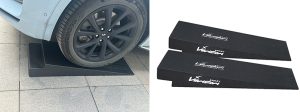
Sufficient Load Capacity Reduces Structural Risks

Every trailer ramp should have an appropriate load capacity for the equipment being transported.

The required capacity should consider more than the basic equipment weight. Factors such as wheel or track configuration, loading dynamics, and the distribution of weight across the ramp can also affect structural requirements.

Heavy-Duty Trailer Ramps

For heavy equipment applications, a heavy-duty trailer ramp should provide sufficient structural strength and an appropriate safety margin.

Important design considerations include:

  • Maximum rated load
  • Ramp width
  • Structural support
  • Material strength
  • Hinge or attachment design
  • Load distribution
  • Contact points between the ramp and trailer

Choosing a ramp based only on equipment weight without considering these factors can increase loading risks.

Anti-Slip Surfaces Improve Traction

Traction is especially important when loading equipment in wet, muddy, or dusty conditions.

A trailer ramp with an effective anti-slip surface can provide better contact between tires or tracks and the ramp surface.

Common traction-enhancing features include:

  • Textured surfaces
  • Raised traction patterns
  • Serrated surfaces
  • Grip plates
  • Perforated designs

The goal is to help maintain consistent contact between the equipment and ramp during movement.

Why Traction Matters

Loss of traction can cause equipment to stop unexpectedly, slide backward, or move sideways. A suitable ramp surface helps reduce these possibilities and provides operators with greater control.

Proper Ramp Width Provides Better Stability

Ramp width is another important part of loading safety.

A ramp should provide enough usable surface for the equipment’s tires or tracks while allowing for reasonable alignment during loading.

A ramp that is too narrow can make precise positioning more difficult, particularly when loading wider machinery.

Proper width can help:

  • Improve wheel alignment
  • Reduce the risk of driving off the ramp
  • Make loading easier for operators
  • Accommodate different equipment sizes
  • Improve overall loading confidence

For wider machinery, dual ramps or wider full-width ramp systems may provide additional stability depending on the trailer configuration.

Stable Ramp Connections Prevent Movement

A strong ramp surface is not enough if the ramp is not securely connected to the trailer.

The connection between the ramp and trailer should be designed to handle the expected loading forces. Depending on the ramp system, this may involve hinges, pins, support brackets, attachment lips, or other securing mechanisms.

A stable connection helps prevent:

  • Ramp shifting
  • Unexpected movement
  • Separation from the trailer
  • Uneven loading surfaces

Before use, operators should verify that the ramp is correctly positioned and securely attached.

Folding and Portable Designs Can Improve Handling

For users who frequently attach and remove ramps, folding or portable trailer ramp designs can make setup easier.

A portable ramp should still provide appropriate structural support and a secure connection to the trailer.

Useful design features may include:

  • Folding sections
  • Lightweight construction
  • Carry handles
  • Compact storage dimensions
  • Secure locking mechanisms

Better handling can reduce the chance of improper installation caused by difficult or overly heavy ramp components.

Edge Design Helps Reduce Off-Ramp Risks

The edges of a loading ramp also contribute to safe operation.

Appropriate edge design can help guide equipment and reduce the possibility of wheels moving beyond the usable ramp surface.

Depending on the application, useful features may include:

  • Raised side edges
  • Guide rails
  • Adequate ramp width
  • High-visibility edge markings
  • Reinforced side structures

These features can be particularly valuable when loading equipment with limited maneuvering space.

Ramp Design Should Match the Equipment

There is no single trailer ramp design that works equally well for every application.

Different equipment types create different loading requirements.

Construction Equipment

Excavators, skid-steer loaders, compact loaders, and other machinery may require ramps with high load capacity and strong traction.

Landscaping Equipment

Mowers and compact landscaping equipment may benefit from lightweight ramps that are easy to deploy frequently.

Vehicles and ATVs

Vehicle loading often requires sufficient width, controlled ramp angles, and reliable traction.

Agricultural Machinery

Agricultural equipment may require wider or heavier-duty ramp systems depending on its dimensions and operating weight.

Matching the ramp to the equipment helps create a safer and more predictable loading process.

How Proper Trailer Ramp Design Supports Efficient Loading

Safety and efficiency often work together.

When a ramp has the correct dimensions, traction, capacity, and connection system, operators can spend less time repositioning equipment or correcting alignment problems.

A well-designed ramp can therefore contribute to:

  • Smoother equipment movement
  • Faster loading and unloading
  • Easier ramp setup
  • Reduced handling difficulties
  • Better operator control
  • More consistent loading procedures

The result is a loading system that supports both operational efficiency and risk reduction.

A properly designed trailer ramp can provide better stability, improved traction, easier handling, and more predictable loading performance, making it an important component of a safer equipment transportation process.
Corrosion-Resistant Trailer Ramps for Coastal Environments

Operating trailers in coastal environments presents unique challenges. High humidity, salt spray, and airborne chlorides can significantly accelerate corrosion, leading to reduced load capacity, safety risks, and shortened equipment lifespan. For vehicle owners, fleet operators, and marine-related industries, standard trailer ramps often fail prematurely under these harsh conditions.

Why Coastal Environments Accelerate Corrosion

Coastal regions combine several factors that intensify corrosion:

  1. Salt-laden air that deposits chlorides on metal surfaces
  2. High humidity that sustains electrochemical corrosion processes
  3. Frequent temperature cycling causing microcracks in coatings
  4. Occasional seawater contact during boat launching or shoreline operations

These conditions can quickly degrade untreated steel ramps, leading to rust, weakened welds, and compromised safety.

Key Features of Corrosion-Resistant Trailer Ramps

1. Material Selection

The foundation of corrosion resistance lies in material choice:

    • Aluminum alloy ramps

Naturally corrosion-resistant, lightweight, and ideal for frequent handling. Aluminum forms a protective oxide layer that resists salt-induced rust.

    • Galvanized steel ramps

Zinc-coated steel provides sacrificial protection, significantly slowing corrosion in salt-air environments.

    • Stainless steel components

Often used in pins, fasteners, and hinges to prevent localized corrosion at critical connection points.

2. Protective Surface Treatments

Advanced surface treatments further enhance durability:

  • Hot-dip galvanization for long-term outdoor exposure
  • Marine-grade powder coatings with enhanced adhesion and salt-spray resistance
  • Anodized aluminum finishes for added protection and wear resistance

High-quality coatings are essential for preventing corrosion initiation at edges, welds, and high-wear areas.

3. Structural Design for Drainage and Ventilation

Well-designed trailer ramps minimize moisture retention by:

  • Incorporating open-grid or perforated surfaces
  • Avoiding enclosed sections where saltwater can accumulate
  • Using smooth weld transitions to reduce corrosion-prone crevices

Good drainage not only reduces corrosion but also improves traction during wet conditions.

Typical Coastal Applications

  1. Boat trailers and marine transport
  2. Car haulers in coastal cities
  3. Rental fleets near beaches and ports
  4. Landscaping and construction trailers in humid regions
  5. Emergency and recovery vehicles operating near shorelines

In these applications, corrosion-resistant ramps reduce downtime and long-term maintenance costs.

Safety Benefits in Corrosive Environments

Corrosion is not just a cosmetic issue—it directly affects safety. Corrosion-resistant trailer ramps help ensure:

  • Consistent load-bearing capacity
  • Secure traction surfaces free from flaking rust
  • Reliable hinges, locking pins, and mounting points
  • Reduced risk of sudden structural failure

For coastal operations, corrosion resistance is a critical safety requirement, not an optional upgrade.

Maintenance Best Practices for Coastal Use

Even corrosion-resistant ramps benefit from proper care:

  1. Rinse ramps with fresh water after salt exposure
  2. Inspect welds, fasteners, and coatings regularly
  3. Touch up damaged coatings promptly
  4. Store ramps in covered or ventilated areas when possible

Routine maintenance can significantly extend the service life of ramps used in coastal environments.

How to Choose the Right Corrosion-Resistant Trailer Ramp

When selecting a trailer ramp for coastal use, consider:

  • Material type (aluminum vs galvanized vs stainless components)
  • Load rating with safety margin
  • Surface traction design for wet and sandy conditions
  • Certification or testing for salt spray and corrosion resistance
  • Total cost of ownership, not just initial price

Investing in corrosion-resistant designs often results in lower long-term costs and improved reliability.

Coastal environments demand more from loading equipment. Corrosion-resistant trailer ramps provide the durability, safety, and reliability needed to withstand salt air, humidity, and harsh outdoor conditions. Through the right combination of materials, coatings, and structural design, these ramps deliver long-term performance where standard ramps fall short.

Preventing Corrosion in Coastal Trailer Ramp Hardware

Coastal environments are some of the most aggressive settings for metal hardware. High humidity, salt-laden air, UV exposure, and temperature fluctuations accelerate corrosion on trailer ramp components—especially hinges, fasteners, locking pins, springs, and load-bearing joints. For operators who rely on trailer ramps to load valuable equipment, preventing corrosion is not just a maintenance concern, it is a safety and lifecycle imperative.

Why Coastal Corrosion Happens Faster

Salt (NaCl) in the air forms electrolytic films on metal surfaces. When combined with moisture, this creates micro galvanic cells that rapidly oxidize exposed steel and aluminum hardware. The effects are intensified by:

  1. Relative humidity above 60%, enabling persistent surface wetness
  2. Chloride deposition, which breaks down passive oxide layers
  3. Dissimilar metal contact, triggering galvanic corrosion
  4. Cyclic loading, which introduces coating micro-cracks
  5. UV radiation, degrading polymer-based protective layers

High-Risk Hardware Zones on Trailer Ramps

From field inspections, the most vulnerable ramp hardware includes:

  • Deck-to-ramp hinge assemblies
  • Latching mechanisms and locking pins
  • Pivoting joints on foldable or telescoping ramps
  • Winch mounts, tension springs, and cable anchors
  • Wheel contact edges with repeated abrasion

Protective Coatings That Actually Work Near the Ocean

1. Barrier Coatings

  • Epoxy marine primers
  • Polyurea or polyurethane topcoats
  • PVC-free polymer coatings (environmentally safer, no chloride emissions)

2. Sacrificial Coatings

  • Zinc or zinc-alloy plating
  • Hot-dip galvanization

3. Passivation & Sealing

  • Chemical passivation for stainless steel
  • Nano ceramic sealers for plated or anodized parts

4. Galvanic Isolation

  • Nylon or POM bushings at pivot joints
  • Non-conductive washers between dissimilar metals

Engineering Design Strategies for Corrosion Prevention

Coating alone is not enough. Hardware design can dramatically slow corrosion if it includes:

  1. Drainage paths to prevent standing salt water at joints
  2. Avoiding crevice traps where salt deposits accumulate
  3. Rounded edges to reduce coating stress cracks
  4. Replaceable wear strips at abrasion zones
  5. Fastener caps or boots on exposed bolt heads
  6. Vent-protected internal cavities for hollow hardware parts

Maintenance Practices for Maximum Service Life

Even the best coatings fail early without a coastal-specific maintenance routine:

  • Fresh-water rinse every 1–2 weeks, especially after rainstorms carrying sea spray
  • Drying before storage, to avoid overnight salt electrolyte persistence
  • Re-applying corrosion inhibitor quarterly
  • Annual hardware audit, replacing parts showing pitting or coating delamination
  • Torque re-checks, as rust buildup can loosen threaded joints

Field-Proven Product Stack for Coastal Trailer Ramp Hardware

A reliable coastal hardware protection system typically layers:

  1. 316 stainless or zinc-nickel plated hardware
  2. Passivation or anodization
  3. Nano ceramic or epoxy marine primer
  4. Non-conductive washers/bushings for isolation
  5. Wax or lanolin corrosion inhibitor as final layer

This multi-layer stack resists both chemical attack and mechanical wear, while enabling hardware to survive long service intervals even in salt-rich air.

Coastal trailer ramp corrosion is unavoidable—but rapid corrosion is optional. With the right materials, coatings, mechanical design, and maintenance cadence, ramp hardware can maintain structural integrity and operational safety for years longer than untreated or single-layer protected components.

Protecting Trailer Ramps from Salt, Mud, and Chemical Wear

Trailer ramps operate in some of the harshest environments—exposed to road salt in winter logistics, caked-on mud at construction or agricultural sites, and accidental contact with fuels, fertilizers, or industrial chemicals. Without deliberate protection, ramps suffer accelerated corrosion, coating breakdown, surface erosion, and safety-critical loss of traction. The result is shorter service life, higher lifecycle costs, and more material waste from unnecessary replacements.

How Salt, Mud, and Chemicals Degrade Trailer Ramps

Road salt (typically chlorides) is the most aggressive corrosion driver for steel and unprotected weld joints. It penetrates micro-cracks in coatings, traps moisture, and forms electrochemical cells that rapidly oxidize metal.

Mud and soil slurry carry silica, clay, and organic acids. When vehicles repeatedly load over a dirty ramp, the embedded particles act as abrasives, grinding away anti-slip textures and wearing through protective layers.

Chemical exposure varies by industry. Diesel and hydraulic fluids dissolve many polymer coatings, fertilizers introduce nitrates and phosphates that attract moisture, and cleaning agents or solvents may strip conventional paints entirely.

Material-Level Protection Strategies

  1. Aluminum ramps resist chloride corrosion better than steel but are prone to mechanical gouging and texture loss, requiring surface hardening or sacrificial skid layers.
  2. Galvanized or duplex-coated steel ramps (zinc + topcoat) delay corrosion but must be paired with edge sealing to protect cut ends and bolt holes.
  3. Composite-panel ramps can integrate wear-resistant fillers to improve surface hardness. Your known interest in hollow glass microspheres and glass bubble composites fits well here—these fillers can reduce weight while increasing compressive strength and damping, but need careful surface encapsulation to avoid particle pull-out.

Sustainability & Repair-First Engineering

The biggest opportunity to fight replacement culture is modularity:

  • Design ramps with replaceable traction surfaces
  • Use rebuildable side rails
  • Standardize parts for spindle pins, hinges, anti-skid layers, and fasteners
  • Prioritize coatings that can be recoated or patched without full stripping

Additionally, industrial filler waste streams—such as recycled glass bubble, ceramic grit, or metal powder by-products—can be reused in structural ramp cores or protective syntactic layers, lowering SWaP (size-weight-power) while diverting waste into long-life applications.

Custom Trailer Ramps for Special Vehicles and Equipment

From construction machinery and agricultural vehicles to military, rescue, and mobility equipment, custom trailer ramps have become an essential solution for ensuring safe, efficient, and damage-free loading and unloading.

Why Standard Trailer Ramps Are Not Always Enough

Off-the-shelf trailer ramps are typically designed for general-purpose vehicles such as motorcycles, ATVs, and light machinery. However, special vehicles and equipment often present challenges such as:

  1. Non-standard wheel spacing or track width
  2. Extreme weight loads beyond regular ramp capacity
  3. Low ground clearance or long wheelbases
  4. Uneven weight distribution
  5. Track-based equipment instead of wheels

In such cases, using standard ramps increases the risk of slippage, structural failure, equipment damage, and serious safety事故. Custom trailer ramps are engineered specifically to eliminate these risks.

Key Advantages of Custom Trailer Ramps

1. Perfect Load Matching

Custom ramps are designed with the exact load capacity required—whether for compact utility vehicles or 30-ton construction machines—ensuring zero over-design or safety compromise.

2. Optimized Loading Angle

Ramp length and slope are customized to protect low-clearance vehicles, hydraulic machinery, and sensitive undercarriages from impact damage.

3. Enhanced Safety and Stability

Anti-slip surfaces, reinforced side curbs, traction rungs, and locking systems are all adapted to the operating environment and equipment type.

4. Improved Loading Efficiency

Faster, smoother loading means reduced labor time, improved fleet turnaround, and higher daily operating capacity.

5. Long-Term Cost Savings

By preventing accidents, reducing equipment wear, and minimizing downtime, custom trailer ramps deliver excellent return on investment.

Special Vehicles and Equipment That Require Custom Trailer Ramps

1. Construction Equipment

  • Excavators
  • Skid steer loaders
  • Bulldozers
  • Rollers

These machines require extra-wide, heavy-duty, reinforced steel ramps with high traction and structural rigidity.

2. Agricultural Machinery

  • Tractors
  • Harvesters
  • Sprayers

Custom ramps for agriculture often include corrosion-resistant coatings and mud-shedding traction surfaces.

3. Military and Emergency Vehicles

  • Armored vehicles
  • Rescue trucks
  • Firefighting units

These require rapid-deployment, ultra-strong, field-ready ramp systems with extreme load ratings.

4. Mobility and Accessibility Equipment

  • Wheelchair vehicles
  • Medical transport units
  • Special access trailers

These ramps prioritize low-angle slopes, smooth transitions, and full accessibility compliance.

Market Trends Driving Demand for Custom Trailer Ramps

  1. Growth in specialized logistics and heavy transport
  2. Expansion of construction and infrastructure projects
  3. Rising demand for emergency response and mobility solutions
  4. Increasing adoption of automated and hydraulic ramp systems
  5. Stricter global workplace safety regulations

As operations become more specialized, the demand for customized loading systems continues to rise globally.

Custom trailer ramps are no longer a niche solution—they are a critical component of safe, efficient, and professional equipment transport. For special vehicles and non-standard machinery, customized ramp systems provide the only reliable way to ensure optimal loading angles, proper weight distribution, and long-term structural safety.

Modular Trailer Ramps: Flexibility for the Modern Worksite

Modular trailer ramps have emerged as a smart and efficient solution for worksites that demand versatility, mobility, and safety. From warehouses and distribution centers to construction zones and service yards, these modular systems are transforming how equipment, vehicles, and materials are loaded and unloaded.

Why Modular Trailer Ramps Are Gaining Popularity

1. Adaptable to Multiple Trailers and Worksite Layouts
Traditional fixed ramps are limited in configuration and placement. Modular trailer ramps, however, can be assembled, reconfigured, or expanded based on the unique needs of the day. Whether your team is loading heavy machinery or rolling pallets into a standard cargo trailer, modular designs ensure a perfect fit.

2. Rapid Setup and Breakdown
Time is money on a busy worksite. Modular ramp systems are engineered for fast assembly, allowing workers to install or remove them without specialized tools or heavy equipment. This flexibility significantly reduces downtime and increases productivity.

3. Scalable and Customizable
Need a longer ramp for low-clearance equipment? Require a wider platform for oversized loads? Modular ramps can be fitted with extension pieces, guardrails, and transition plates to handle diverse operational requirements. Their scalability ensures long-term usability as your fleet or workflow evolves.

4. Enhanced Safety for Operators and Equipment
Safety is paramount when moving heavy loads. Modular ramps feature slip-resistant surfaces, stable support structures, and ergonomic gradients to reduce the risk of accidents. Some models also include handrails and side curbs to guide vehicles and protect operators.

5. Cost-Effective Long-Term Investment
Instead of purchasing multiple fixed ramps for different trailers or tasks, modular systems provide a single, versatile solution. Their replaceable components and durable construction lower maintenance costs while extending service life.

Applications Across Industries

  • Construction: Easy access for skid steers, compact loaders, and service trucks.
  • Logistics & Warehousing: Efficient pallet and forklift movement between docks and trailers.
  • Automotive Services: Mobile service operations benefit from lightweight, movable ramps.
  • Agriculture: Ideal for loading machinery and supplies in changing field environments.

As worksites become more dynamic, the tools and equipment supporting them must evolve as well. Modular trailer ramps offer the perfect balance of strength, flexibility, and efficiency—making them an essential asset for modern operations. Whether you manage a small facility or a large industrial site, investing in modular ramp systems ensures your team has the adaptability needed to handle any loading challenge with confidence.

Future Trends in Trailer Ramp Design for Green Logistics

As sustainability becomes a defining principle in transportation and logistics, trailer ramp design is evolving to align with the goals of green logistics. Traditionally seen as simple mechanical accessories, trailer ramps are now being reimagined through the lens of efficiency, safety, and environmental responsibility.

One of the most significant trends is the use of lightweight materials such as aluminum alloys and composite structures. By reducing the total ramp weight without sacrificing strength, these materials contribute to lower fuel consumption and emissions during transport. Moreover, new composite formulations using recycled fibers and resins provide an eco-friendly alternative to conventional steel ramps.

Another important direction is the integration of smart and automated systems. Hydraulic and electric-assisted trailer ramps are increasingly equipped with energy-efficient actuators, making loading and unloading smoother and less labor-intensive. Some advanced models now include sensor-based load monitoring and IoT connectivity, enabling operators to track performance and maintenance needs, thus minimizing downtime and improving fleet efficiency.

Manufacturers are also focusing on modular ramp designs that can be disassembled, repaired, or upgraded instead of replaced. This approach supports a circular economy, extending product life cycles and reducing waste. Additionally, surface engineering innovations—such as durable anti-slip coatings and corrosion-resistant finishes—further enhance safety and longevity in harsh environments.

In the context of green logistics, every efficiency counts. Lighter, smarter, and more durable trailer ramps not only make vehicle operations safer but also help companies achieve carbon reduction goals and improve sustainability metrics.

As global supply chains continue to evolve, the trailer ramp—once a simple loading tool—is becoming a symbol of how industrial design and sustainability can move forward together.

Versatile Trailer Ramps for All-Terrain Use

Transporting heavy equipment, vehicles, or cargo across uneven surfaces can be a challenge—especially when loading onto a trailer in rugged or off-road environments. That’s where versatile trailer ramps for all-terrain use come in. These heavy-duty ramps are engineered for performance, portability, and adaptability across various surfaces, from gravel and mud to grass, dirt, and rocky terrain.

Where All-Terrain Ramps Make the Difference

Farms and Ranches
Easily load mowers, tillers, and small tractors onto trailers across grass, soil, or gravel.

Construction Sites
Transport generators, mini excavators, or toolboxes over uneven terrain with confidence.

Outdoor Recreation
Load ATVs, dirt bikes, or snowmobiles at campsites, forest trails, or roadside pull-offs.

Emergency and Utility Services
All-terrain ramps provide reliable access when responding in off-road or rural areas.

Key Features to Look For

When shopping for versatile trailer ramps built for rugged conditions, consider the following:

Material strength: Aluminum offers corrosion resistance and lighter weight; steel adds extra strength for extreme use.

Portability: Folding or telescopic designs are easier to carry and store.

Traction control: Look for rubber grips, punched treads, or serrated surfaces.

Weight rating: Ensure the ramp supports the maximum expected load, plus a safety margin.

Stability features: Raised edges or stabilizing plates help prevent shifting during loading.

Whether you’re operating in the field, in the woods, or on a construction site, versatile trailer ramps designed for all-terrain use give you the freedom and flexibility to move your equipment anywhere—safely and efficiently. Invest in the right ramp once, and it will pay you back with years of rugged reliability and performance.

Durable Trailer Ramp for Farm and Construction Equipment

When it comes to transporting heavy machinery like tractors, skid steers, or mini excavators, a reliable trailer ramp is a must. In demanding environments such as farms and construction sites, durability and performance are non-negotiable. That’s why investing in a durable trailer ramp built specifically for rugged equipment makes all the difference in safety, efficiency, and long-term value.

Engineered for Heavy Loads

Unlike standard vehicle ramps, trailer ramps for agricultural and construction equipment are designed to handle extreme weights. These ramps are typically constructed from reinforced steel or high-grade aluminum, with load capacities ranging from 5,000 to over 20,000 pounds. They provide stable support for loading wheeled or tracked machinery onto flatbeds, trailers, or transport vehicles.

Non-Slip Surface for Safety

Working conditions on farms and construction sites are rarely ideal—mud, gravel, and dust can all increase the risk of slips. A good trailer ramp comes with a non-slip surface such as serrated steel grating or punched traction holes to ensure safe loading, even in wet or uneven terrain.

Built to Withstand Harsh Environments

From exposure to rain and sun to constant contact with heavy-duty tires and steel tracks, ramps in these sectors take a beating. That’s why durable trailer ramps are built with rust-resistant coatings, welded structural reinforcements, and weatherproof finishes that extend service life even in the toughest outdoor environments.

Key Benefits

Supports extreme weight loads

Safe, anti-slip surface

Resists bending and deformation

Corrosion-resistant for long-term outdoor use

Optional features like handles, folding designs, or mounting kits

Common Applications

Tractor and Combine Harvester Transport

Mini Excavators and Skid Steer Loaders

Compact Utility Vehicles (UTVs)

Construction Rollers and Cement Mixers

Heavy Equipment Relocation Between Job Sites

Whether you’re hauling agricultural machinery across fields or moving construction equipment between projects, a durable trailer ramp provides the strength and stability needed to get the job done safely. With the right ramp in place, you can protect your equipment, speed up operations, and reduce the risk of workplace accidents.