
Efficient loading and unloading are essential to modern transportation logistics. Whether a fleet is transporting vehicles, construction machinery, industrial equipment, or other mobile assets, the loading process can directly affect turnaround time, operational efficiency, and equipment safety.
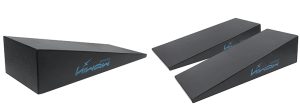
The design of the trailer ramp is particularly important. A trailer ramp with an 8-degree approach angle provides a relatively gradual transition between the ground and trailer deck, making it suitable for applications where ground clearance and smooth loading are important.
By reducing the steepness of the loading transition, an 8-degree approach angle can help transportation operators improve loading efficiency and accommodate a wider range of vehicles and equipment.
Benefits for Vehicle Transportation Fleets
Vehicle transport companies often need to load and unload multiple vehicles during daily operations.
A trailer ramp 8-degree approach angle can provide several logistical advantages:
- Easier vehicle access
- Improved compatibility with low-clearance vehicles
- Smoother loading transitions
- More efficient loading procedures
- Reduced dependence on additional loading equipment
These benefits can be especially valuable for fleets that regularly transport a diverse range of vehicles.
Applications for Heavy Equipment Transportation
Trailer ramps are also widely used to load mobile machinery and equipment.
Construction and industrial equipment may include:
- Compact excavators
- Skid-steer loaders
- Forklifts
- Small tractors
- Utility machinery
- Maintenance equipment
For wheeled or tracked equipment, ramp geometry should be selected according to equipment dimensions, weight, ground clearance, tire or track configuration, and trailer capacity.
An appropriate low-angle ramp can help create a smoother transition during equipment loading.
Reducing Challenges for Low-Clearance Loads
One of the most important applications of an 8-degree approach angle is low-clearance vehicle transportation.
Vehicles with long wheelbases, low front overhangs, or limited ground clearance may require careful ramp selection.
A gradual ramp angle can help reduce abrupt changes in elevation and provide a smoother path onto the trailer.
Operators should still verify the complete loading geometry before use, including:
- Vehicle approach angle
- Ramp angle
- Trailer deck height
- Ramp length
- Ground conditions
- Vehicle wheelbase
- Front and rear overhang
Trailer Ramp Design and Operational Safety
Ramp angle is only one factor affecting safe loading.
A transportation system should also consider:
- Trailer load capacity
- Ramp load rating
- Ramp surface traction
- Ramp width
- Trailer stability
- Wheel or track positioning
- Securement procedures
- Ground conditions
- Operator training
An 8-degree approach angle can support smoother access, but it should be combined with appropriate loading procedures and equipment specifications.
A trailer ramp with an 8-degree approach angle can provide important logistical benefits for vehicle and equipment transportation. Its relatively gradual loading transition can make it particularly useful for low-clearance vehicles and applications that require smooth access to the trailer deck.
By combining an appropriate ramp angle with sufficient capacity, traction, width, structural strength, and proper loading procedures, transportation operators can improve loading efficiency and reduce operational challenges.